
• Join Our Newsletter
  • Contact
  • Careers
  • Ways To Give
  • Cart
PCN logo
  • Watch Now ›
  • Shows
    • America’s 250th
    • Politics & Policy
    • History & Culture
    • PCN Sports
    • Weather World
  • How To Watch
    • Schedule
    • PCN Select
    • Cable TV
    • FAQ
  • Who We Are
    • About PCN
    • Our History
    • Leadership
    • News/Press
    • Our Sponsors
  • Shop
  • DONATE
You are here: Home / Archive PA Books / PA Books: “Frank Furness: Architecture in the Age of the Great Machines”

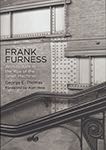
Frank Furness: Architecture in the Age of the Great Machines

Frank Furness (1839-1912) has remained a curiosity to architectural historians and critics, somewhere between an icon and an enigma, whose importance and impact have yet to be properly evaluated or appreciated. To some, his work pushed pattern and proportion to extremes, undermining or forcing together the historic styles he referenced in such eclectic buildings as the Pennsylvania Academy of the Fine Arts and the University of Pennsylvania Library. To others, he was merely a regional mannerist creating an eccentric personal style that had little resonance and modest influence on the future of architecture. By placing Furness in the industrial culture that supported his work, George Thomas finds a cutting-edge revolutionary who launched the beginnings of modern design, played a key part in its evolution, and whose strategies continue to affect the built world. In his sweeping reassessment of Furness as an architect of the machine age, Thomas grounds him in Philadelphia, a city led by engineers, industrialists, and businessmen who commissioned the buildings that extended modern design to Chicago, Glasgow, and Berlin. Thomas examines the multiple facets of Victorian Philadelphia's modernity, looking to its eager embrace of innovations in engineering, transportation, technology, and building, and argues that Furness, working for a particular cohort of clients, played a central role in shaping this context. His analyses of the innovative planning, formal, and structural qualities of Furness's major buildings identifies their designs as initiators of a narrative that leads to such more obviously modern figures as Louis Sullivan, William Price, Frank Lloyd Wright and eventually, the architects of the Bauhaus.

George E. Thomas is a cultural and architectural historian who serves as co-director of the Critical Conservation Program at Harvard's Graduate School of Design.

Description courtesy of University of Pennsylvania Press.

Watch PA Books and more PA History and Culture on cable and the PCN Select Streaming Service.

Stay up to date

Join Our Newsletter

Support PCN

Explore Ways to Give

Go to PCN Select

Watch Now
PCN 401 Fallowfield Rd
Camp Hill, PA 17011
717-730-6000 info@pcntv.com

Shows

  • America’s 250th
  • Politics & Policy
  • History & Culture
  • PCN Sports
  • Weather World

How to Watch

  • Schedule
  • PCN Select
  • Cable TV
  • FAQ

Who We Are

  • About PCN
  • Our History
  • Leadership
  • News/Press
  • Our Sponsors

    Contact & Support

  • Join Our Newsletter
  • Contact Us
  • Careers
  • Ways To Give
  • Shop

©2026 Pennsylvania Educational Communications Systems. All Rights Reserved | Privacy Policy | Terms Of Service

PCN is a 501(c)(3) nonprofit television network located in Camp Hill, Pennsylvania. Dedicated to educating, connecting, and celebrating Pennsylvania's past, present and future through cable television and streaming platforms.

Manage Consent
To provide the best experiences, we use technologies like cookies to store and/or access device information. Consenting to these technologies will allow us to process data such as browsing behavior or unique IDs on this site. Not consenting or withdrawing consent, may adversely affect certain features and functions.
Functional Always active
The technical storage or access is strictly necessary for the legitimate purpose of enabling the use of a specific service explicitly requested by the subscriber or user, or for the sole purpose of carrying out the transmission of a communication over an electronic communications network.
Preferences
The technical storage or access is necessary for the legitimate purpose of storing preferences that are not requested by the subscriber or user.
Statistics
The technical storage or access that is used exclusively for statistical purposes. The technical storage or access that is used exclusively for anonymous statistical purposes. Without a subpoena, voluntary compliance on the part of your Internet Service Provider, or additional records from a third party, information stored or retrieved for this purpose alone cannot usually be used to identify you.
Marketing
The technical storage or access is required to create user profiles to send advertising, or to track the user on a website or across several websites for similar marketing purposes.
  • Manage options
  • Manage services
  • Manage {vendor_count} vendors
  • Read more about these purposes
View preferences
  • {title}
  • {title}
  • {title}